

Russian APT actor phishes the Baltics and the Balkans
On December 5th, a Russian APT targeted Transnistria’s governing body with a credential phishing email attachment, spoofing the Pridnestrovian Moldavian Republic. The image below shows the email content translated.
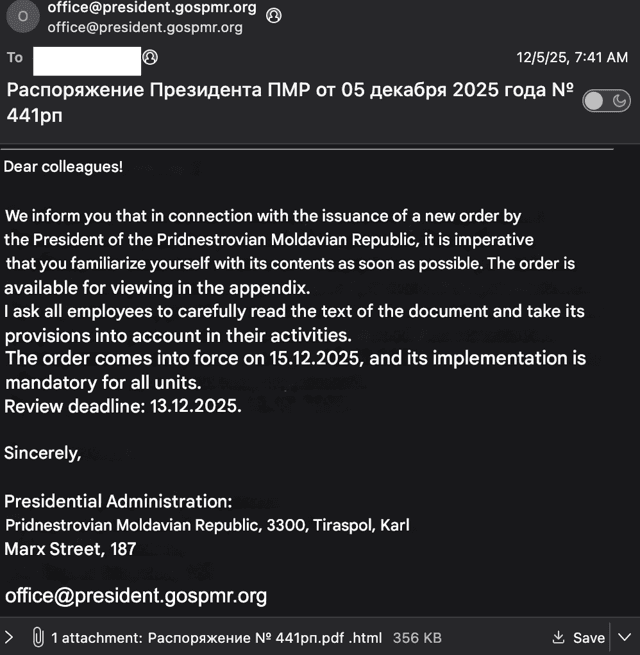
Figure 1: translated phish from google translate
The attachment, Распоряжение № 441рп.pdf .html (Order No. 441rp.pdf .html) , shows the decoy content when executed

Figure 2: the decoy, that will be blurred
The html loads the image in a DIV named bluer, which is a misspelling of “blur”. The CSS applies a blur filter, as seen below

Figure 3: CSS to blur the background image
One can see the blur effect when viewing the phish page in a browser

Figure 4: rendered phish box
Upon entering credentials, it checks if the password complies with a complex regex that appears to be inspired by this blog.

Figure 5: checkP function to regex test the password
If the password matches the regex, it is POSTed to formcarry.com. However, if the password does not match, it still steals the data, perhaps in an effort to gather secondary passwords that might be valid else where.

Figure 6: send creds to formcarry
This campaign has been active since at least 2023 with spears such as 12th package of sanctions against Russia.pdf.html, based on identical regular expressions and javascript logic.
Other notable decoy images from this campaign are below.

Figure 7: other decoy images
There was one phish that did not follow the same pattern, and instead loaded unknown, but suspected malicious code, from an external server, timesyncwindows.com

Figure 8: decoy from an outlier phish, with externally hosted content

Figure 9: assumed malicious content loaded by script
Other files from this same campaign are below, along with the target, which is often embedded in the payload
Lure | Assessed Target |
|---|---|
| Ukraine DIB |
| Governments of Bosnia and Herzegovina, Macedonia, Montenegro, Spain |
| Governments of Ukraine, Lithuania |
| Macedonia Government |
| Bulgaria Government |
| Ukraine DIB |
| Macedonia Government |
| Moldova Government |
| Moldova Government |
Figure 10: Lures from this campaign
Because the phish lures often contain the direct target information, we are not providing the content as we normally do, however the IOCs are available on our github
Please get in touch at research@strikeready.com if you have question, corrections, or comments
Acknowledgements
The authors would like to thank the reviewers, as well as peer vendors, for their comments and corrections. Please get in touch at research@strikeready.com if you have corrections, would like us to use your group name, or would like to collaborate on research.

© 2026 StrikeReady. All Rights Reserved.